How to Build a Career in Orthodontics
A Step-by-Step Guide for Students in Kenya
Introduction
Orthodontics goes beyond straightening teeth. It is a specialized field focused on improving oral health, function, and confidence. It offers a fulfilling lifelong career for those who love science, medicine, and meaningful patient relationships.
Why Students Choose Orthodontics
- Combines science and creativity to design beautiful, healthy smiles.
- Builds long-term relationships with patients, fostering confidence.
- Offers visible, life-changing results.
- Provides global opportunities in education, research, and innovation.
Step 1: Excel in Science Subjects
Strong performance in biology, chemistry, physics, and mathematics in high school is important for dental training. You may not need all “A” grades — “A” to “C” is acceptable — but higher grades can strengthen your application, especially because competition is tough.
Step 2: Study Dentistry First
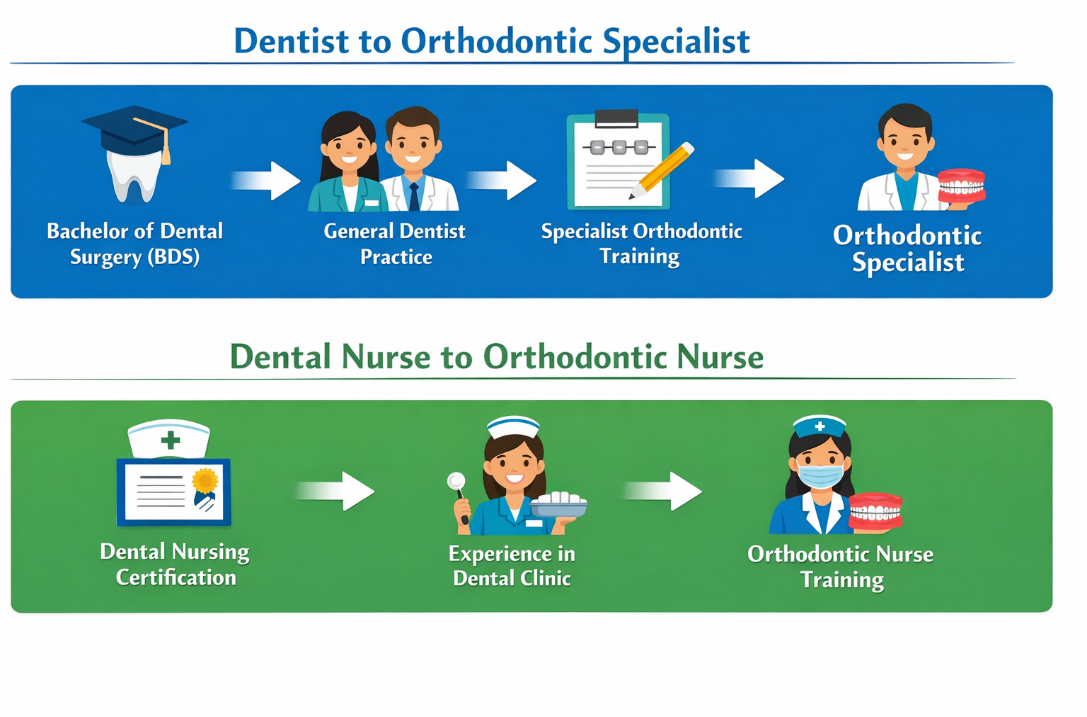
To pursue a career in orthodontics, begin by earning a Bachelor of Dental Surgery (BDS) degree from an accredited institution. This typically takes 5–6 years.
During this time, you will cover:
- Classroom learning in medical and dental sciences
- Practical clinical training
- Treating real patients under professional supervision
Step 3: Gain Clinical Experience
After dental school, new dentists begin general practice. This phase is essential for:
- Gaining hands-on clinical experience
- Improving patient communication skills
- Deciding which specialty truly inspires you
Many future orthodontists discover their passion during this period.
Step 4: Specialise in Orthodontics
Orthodontics is a 3-year postgraduate specialty pursued after dentistry. This advanced training focuses on:
- Safe and controlled tooth movement
- Braces and clear aligner systems
- Jaw development in children and teenagers
- Facial harmony and bite correction
- Advanced digital treatment planning
On completion, you become a certified orthodontic specialist.
Step 5: Commit to Lifelong Learning
Orthodontics continues to evolve with technologies such as:
- 3D digital scanners
- Clear aligner systems
- Computer-guided treatment planning
These tools improve accuracy, comfort, and patient outcomes. Successful orthodontists commit to continuous education, research, and collaboration to remain leaders in their field.
A Final Word of Encouragement
Great careers begin with thoughtful decisions — working hard academically, staying curious, and believing in your potential to grow.
If you’re passionate about healthcare, precision, and changing lives through confident smiles, orthodontics offers a rewarding and impactful future.
Remember: every orthodontist once stood where you are now — a student with a dream.